Olive grove treatment: agricultural mistblowers to be more precise and efficient
12 Febrero 2019 | Blog
We are sure
that you know that olive grove is one of
the bastions of Spanish agriculture. Not by chance, Spain produces
approximately the half of all olive oil that is produced in
the world. You will know too that this strength is threatened and that
olive trees constitute a harassed crop: pests and illnesses damage more and
more these trees, which are very sensitive to climatic change and to world's
globalization, this one making threats become increasingly aggressive.
The olive groves suffer, above all, from fungi's attacks. These organisms cause illnesses like olive peacock spot, the most widely spread of all, anthracnose, cankers, sooty molds, etc. The bacteria cause also significative trouble like the olive tree tuberculosis. Another bacterium, the feared one Xylella fastidiosa, also known as olive tree ebola, has supposed another danger for this agricultural sector since some years.
To these pathologies we must add the pests: acariosis, thrips, coccinella, fly, weevil... A whole army of insects ready to feed on olive trees and their production, and, at the same time, opening the path to illnesses to come into the trees.
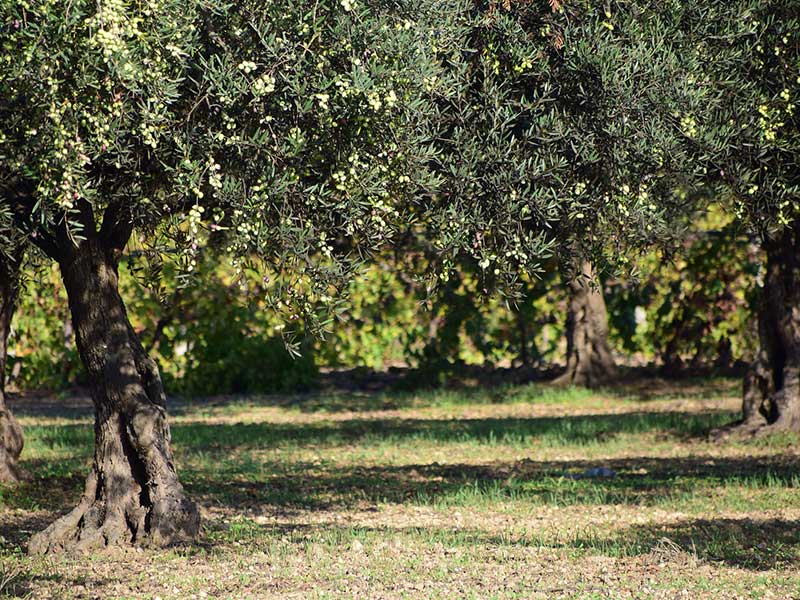
To face these problems, the farmers have very advanced chemicals available. The olive grove treatment is a field in steady progress, and we are constantly adding new agents to long-tradition products. Nevertheless, the efficacy of these composite products depends to a great extent on their application on due time and with proper techniques. Only in this way can we guarantee a high amount of homogeneous good harvests and forget the feared severe discontinuity of these.
To get the right treatment implies using the most precise machines with the most
accurate calibration so that the crops receive the suitable dose of chemical
product. Nearly all the pests and illnesses are controlled by these products'
spraying or mistblowing, whether by treating the full land plot or the sides of
this, or, in some cases, applying directly on the wounds caused by pruning or
over more concrete points.
In the recent years, the mistblowing technique has been preponderant in olive grove treatment practices as it works extremely well in big sized crops, as are usually olive trees plantations. Besides, it is specially recommended for treatments agains cryptogams, i.e., against fungi, and against insects.
Compared to spraying technique, mistblowing allows
to create smaller drops, with diameters from 100 to 200 microns. Moreover,
these drops can be directed more
accurately to the trees thanks to the air flow that the agricultural
mistblowers generate.
In TEYME we have been developing and improving our agricultural mistblowers to reach the
highest efficacy in crops' treatment. Their powerful air flow rate generates a turbulence which makes the
curtain of mistblown chemicals penetrate better amid the olive trees foliage.
In this way, you spend less product,
making this one much more effective, as it reaches better to all the coins of
the tree.
Nevertheless, as you can imagine, not all
agricultural mistblowers are equal. You must choose machines which meet the needs of your crop. You cannot use the same
machine for traditional old olive groves than for intensive plantations or for
hedge or espalier ones. For this reason, it is important that you know the
features of each machine to choose the agricultural mistblower that mostly
suits you.
The mistblowers differ above all in power and precision. Some of them are more powerful and can generate more pressure and faster speeds in the air flow that carries the product towards the trees. Other are more accurate and place the chemicals most precisely, there where they are mostly needed, avoiding drifts and unnecessary losses.